





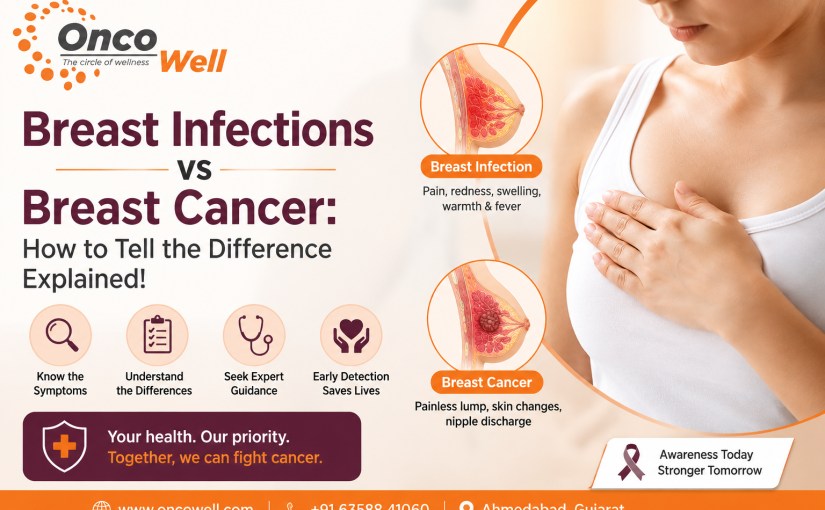
Why It’s Easy to Confuse Breast Infections and Breast Cancer
For many women, breast-related issues can trigger anxiety. Painful lumps, swelling, or redness may cause fears of cancer. Although not all breast changes indicate cancerous conditions. Sometimes, infections can cause such symptoms. Understanding the difference between the causes will help a patient receive appropriate treatment when needed. A visit to an Breast cancer doctor in Ahmedabad may provide answers whenever a patient experiences unusual or persistent symptoms.
Understanding Breast Infections
Infections of the breast occur when bacteria invade the tissue and lead to swelling. They typically appear among breastfeeding women; however, women of any age can develop this disorder.
The most recognizable symptoms of such infections are:
- Pain in the breast
- Inflammation in a certain area
- Agitated breast skin
- Temperature above normal
Breast infections develop much quicker than cancer and come with signs of disease.
Understanding Breast Cancer
Breast cancer occurs due to the rapid development of abnormal cells in the breast tissue. Breast cancer usually takes a long time to progress and thus reinforces the importance of seeing a doctor for regular breast screenings.
There are also several warning signs of breast cancer, including:
- Presence of a lump for several weeks
- Change in breast shape
- Dimpling of the skin
- Discharge from the nipple
- Inverted nipple
- Thickened breast skin
Many breast cancer cases in the early stages do not present symptoms relating to pain, which makes the importance of routine screenings clear.
Breast Infection vs Breast Cancer: Major Differences
Development Speed
An infection can develop in just a matter of days and become painful soon afterwards. In contrast, cancer usually develops over a longer period of time.
Fever and Disease
Fever is usually linked to infections. Breast cancer does not typically cause fever in its early stages.
Pain and Tenderness
Infections often cause considerable pain and tenderness. In contrast, cancerous lumps tend to be painless at first.
Skin Changes
While both infection and cancer may lead to changes in the skin, redness due to infection tends to be temporary. Skin changes caused by cancer tend to last longer and increase with time.
When Should You Be Concerned?
If you experience any of the following conditions, you should see a doctor for evaluation:
A breast lump continues to grow
Symptoms persist despite treatment
There is discharge from the nipple that contains blood
Skin becomes dimpled
Swelling lasts for a few weeks
It is very important to get help from a medical professional early on, as this is the only way to find out what is causing health problems.
How Doctors Confirm the Diagnosis
In order to find out the reason for symptoms, doctors can recommend:
- Conducting a clinical breast examination
- Taking a mammogram
- Having an ultrasound
- Performing an MRI scan
- Getting a biopsy if needed
All of the tests will allow the doctor to make a correct diagnosis and decide on the most efficient method of treatment.
Prevention and Breast Health Tips
Breast health can be ensured by performing:
- Regular self-examination
- Going for scheduled screening appointments
- Living a healthy lifestyle
- Informing a doctor if any unusual changes in the breast occur
Awareness is the most potent tool for early detection.
Conclusion
Breast infectquarta and breast cancer are different. While infection usually occurs suddenly and is characterized by pain, redness, and fever, breast cancer develops gradually. The Oncowell cancer hospital monitoring of the available symptoms is helpful in order to receive early diagnosis and treatment.
Frequently Asked Questions (FAQs)
Ques-1 Can a breast infection result in lumps?
Ans- Yes, breast infections can cause swelling or abscesses that could be perceived as lumps.
Ques-2 Is breast pain always associated with malignancy?
Ans- No, breast pain is most often linked with infection, hormonal fluctuation, or rapid breast condition.
Ques-3 When is it appropriate for me to schedule an appointment with my doctor?
Ans- Any breast lump and persistent redness or unusual changes lasting longer than a few days should be examined by a doctor.